Shiitake
Uses
Parts Used & Where Grown
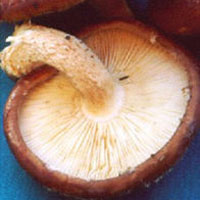
Wild shiitake mushrooms are native to Japan, China, and other Asian countries and typically grow on fallen broadleaf trees. Shiitake is now widely cultivated throughout the world, including the United States. The fruiting body is used medicinally.
Our proprietary "Star-Rating" system was developed to help you easily understand the amount of scientific support behind each supplement in relation to a specific health condition. While there is no way to predict whether a vitamin, mineral, or herb will successfully treat or prevent associated health conditions, our unique ratings tell you how well these supplements are understood by the medical community, and whether studies have found them to be effective for other people.
For over a decade, our team has combed through thousands of research articles published in reputable journals. To help you make educated decisions, and to better understand controversial or confusing supplements, our medical experts have digested the science into these three easy-to-follow ratings. We hope this provides you with a helpful resource to make informed decisions towards your health and well-being.
3 Stars Reliable and relatively consistent scientific data showing a substantial health benefit.
2 Stars Contradictory, insufficient, or preliminary studies suggesting a health benefit or minimal health benefit.
1 Star For an herb, supported by traditional use but minimal or no scientific evidence. For a supplement, little scientific support.
This supplement has been used in connection with the following health conditions:
| Used for | Why |
|---|---|
|
1 Star
Hepatitis
Refer to label instructions
|
One study found that shiitake formulations containing Lentinus edodes mycelium may help decrease blood markers of liver inflammation
An uncontrolled trial found that shiitake formulations containing Lentinus edodes mycelium (LEM— the powdered mycelium of the mushroom before the cap and stem grow) may help decrease blood markers of liver inflammation. One marker of hepatitis B infection in the blood (HBeAg) disappeared in 14% of the patients in this trial. Given the preliminary nature of the research, more information is needed to determine if LEM is effective for hepatitis. |
|
1 Star
HIV and AIDS Support
Refer to label instructions
|
Shiitake is medicinal mushroom immune-modulating effects that may be beneficial for people with HIV infection.
Immune-modulating plants that could theoretically be beneficial for people with HIV infection include Asian ginseng , eleuthero , and the medicinal mushrooms shiitake and reishi . One preliminary study found that steamed then dried Asian ginseng (also known as red ginseng) had beneficial effects in people infected with HIV, and increased the effectiveness of the anti-HIV drug, AZT. This supports the idea that immuno-modulating herbs could benefit people with HIV infection, though more research is needed. |
|
1 Star
Infection
Refer to label instructions
|
Shiitake supports the immune system and protects against microbes.
Herbs that support a person's immune system in the fight against microbes include the following: American ginseng , andrographis , Asian ginseng , astragalus , coriolus, eleuthero , ligustrum , maitake , picrorhiza , reishi , schisandra , and shiitake. |
Traditional Use (May Not Be Supported by Scientific Studies)
Shiitake has been revered in Japan and China as both a food and medicinal herb for thousands of years. Wu Ri, a physician from the Chinese Ming Dynasty era (A.D. 1368–1644), wrote extensively about this mushroom, noting its ability to increase energy, cure colds , and eliminate worms.1
How It Works
How It Works
Shiitake contains proteins, fats, carbohydrates, soluble fiber , vitamins, and minerals. In addition, shiitake's key ingredient—found in the fruiting body—is a polysaccharide called lentinan. Commercial preparations employ the powdered mycelium of the mushroom before the cap and stem grow. This preparation is called lentinus edodes mycelium extract (LEM). LEM is rich in polysaccharides and lignans.
One preliminary trial suggested that oral shiitake may be useful for people with hepatitis B .2 A highly purified, intravenous form of lentinan is used in Japan and has been reported to increase survival in people with recurrent stomach cancer, particularly when used in combination with chemotherapy.3 Similar findings have been found in one small clinical trial with people suffering from pancreatic cancer.4 Case reports from Japan suggest that intravenous lentinan may be helpful in treating people with HIV infection.5 However, large-scale clinical trials to confirm this action have not yet been performed.
Oral supplementation of lentinan from shiitake has been shown to significantly reduce the recurrence rate of genital warts (condyloma acuminata). A preliminary trial involving a group of men and women with genital warts found that those who took 12.5 mg of lentinan twice a day for two months after laser surgery had significantly fewer recurrences (10.53% recurrence rate) compared to those who only had the laser surgery (47.06% recurrence rate).6
How to Use It
The traditional intake of the whole, dried shiitake mushroom is 6–16 grams per day.7 The mushroom is typically eaten in soups or taken as a decoction (i.e., boiled for 10–20 minutes, cooled, strained, and drunk). Recommended intake of LEM is 1–3 grams two to three times per day. Purified lentinan is considered a drug in Japan and is not currently available as an herbal supplement in North America.
Interactions
Interactions with Supplements, Foods, & Other Compounds
Interactions with Medicines
Certain medicines interact with this supplement.
Replenish Depleted Nutrients
-
none
Reduce Side Effects
-
none
Support Medicine
-
Didanosine
Lentinan is a complex sugar found in shiitake mushrooms (Lentinas edodes) and is recognized as an immune modulator. In an early human trial, 88 HIV-infected people received didanosine (400 mg per day) plus a 2 mg lentinan injection per week. Didanosine-lentinan combination therapy improved CD4 immune cell counts for a significantly longer period than didanosine alone. Lentinan is under investigation as an adjunct therapy to be used with didanosine for HIV infection. Oral preparations of shiitake are available, but it is not known if they would be an effective treatment with didanosine for HIV infection.
Reduces Effectiveness
-
none
Potential Negative Interaction
-
none
Explanation Required
-
none
References
1. Jones K. Shiitake: The Healing Mushroom. Rochester, VT: Healing Arts Press, 1995.
2. Jones K. Shiitake: A major medicinal mushroom. Alt Compl Ther 1998;4:53-9 [review].
3. Taguchi I. Clinical efficacy of lentinan on patients with stomach cancer: End point results of a four-year follow-up survey. Cancer Detect Prevent Suppl 1987;1:333-49.
4. Matsuoka H, Seo Y, Wakasugi H, et al. Lentinan potentiates immunity and prolongs the survival time of some patients. Anticancer Res 1997;17:2751-6.
5. Hobbs C. Medicinal Mushrooms. Santa Cruz, CA: Botanica Press, 1995, 125-8.
6. Guangwen Y, Jianbin Y, Dongqin L, et al. Immunomodulatory and therapeutic effects of lentinan in treating condyloma acuminata. CJIM 1999;5:190-2.
7. Hobbs C. Medicinal Mushrooms. Santa Cruz, CA: Botanica Press, 1995, 125-8.
- Top of the page
-
Next Section:
How It Works
-
Previous Section:
Uses - Top of the page
-
Next Section:
Interactions
-
Previous Section:
How It Works - Top of the page
-
Next Section:
Side Effects
-
Previous Section:
Interactions - Top of the page
-
Next Section:
Related Information
-
Previous Section:
Side Effects - Top of the page
-
Next Section:
References
-
Previous Section:
Related Information - Top of the page
-
Next Section:
-
Previous Section:
References - Top of the page
Last Review: 04-14-2015

Copyright © 2020 TraceGains, Inc. All rights reserved.
Learn more about TraceGains, the company.
The information presented by TraceGains is for informational purposes only. It is based on scientific studies (human, animal, or in vitro), clinical experience, or traditional usage as cited in each article. The results reported may not necessarily occur in all individuals. For many of the conditions discussed, treatment with prescription or over the counter medication is also available. Consult your doctor, practitioner, and/or pharmacist for any health problem and before using any supplements or before making any changes in prescribed medications. Information expires December 2020.

