Irritable Bowel Syndrome (IBS)
Topic Overview
What is irritable bowel syndrome (IBS)?
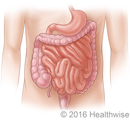
Irritable bowel syndrome (IBS) is a disorder of the intestines. It causes belly pain, cramping or bloating, and diarrhea or constipation. IBS is a long-term problem, but there are things you can do to reduce your symptoms.
Your symptoms may be worse or better from day to day, but your IBS will not get worse over time. IBS doesn't cause more serious diseases, such as inflammatory bowel disease or cancer.
What causes IBS?
It isn't clear what causes irritable bowel syndrome. The cause may be different for different people. IBS may be caused by problems with the way signals are sent between the brain and the digestive tract , problems digesting certain foods, and stress or anxiety. People with IBS may have unusually sensitive intestines or problems with the way the muscles of the intestines move.
For some people with IBS, certain foods, stress, hormonal changes, and some antibiotics may trigger pain and other symptoms.
What are the symptoms?
The main symptoms of irritable bowel syndrome are belly pain with constipation or diarrhea. Other common symptoms are bloating, mucus in the stools, and a feeling that you have not completely emptied your bowels.
Many people with IBS go back and forth between having constipation and having diarrhea. For most people, one of these happens more often than the other.
IBS is quite common, but most people's symptoms are so mild that they never see a doctor for treatment. Some people may have troublesome symptoms, especially stomach cramps, bloating, and diarrhea.
Because there are no structural problems in the intestines of people who have IBS, some people may think this means that the symptoms "are all in their head." This isn't true. The pain, discomfort, and bloating are real.
How is IBS diagnosed?
Most of the time, doctors can diagnose irritable bowel syndrome from the symptoms. Your doctor will ask you about your symptoms and past health and will do a physical exam.
In some cases, you may need other tests, such as stool analysis or blood tests. These tests can help your doctor rule out other problems that might be causing your symptoms.
How is it treated?
Treatment usually includes making changes in your diet and lifestyle, such as avoiding foods that trigger your symptoms, getting regular exercise, and managing your stress.
If diet and lifestyle changes don't help enough on their own, your doctor may prescribe medicines for symptoms such as pain, diarrhea, or constipation.
Health Tools
Health Tools help you make wise health decisions or take action to improve your health.
Cause
The exact cause of irritable bowel syndrome (IBS) isn't known. But health experts believe that faulty communication between the brain and the intestinal tract is one cause of symptoms. In some people, this miscommunication causes abnormal muscle contractions or spasms, which often cause cramping pain. The spasms may speed the passage of stool, causing diarrhea. Or they may slow it down, causing constipation or bloating.
Many people who have IBS seem to have unusually sensitive intestines. It isn't known why their intestines are more likely to react strongly to the elements that contribute to IBS. People who have IBS may start having symptoms because of one or more factors, including:
- Eating (though no particular foods have been linked with IBS).
- Stress and psychological issues, such as anxiety and depression.
- Hormonal changes, such as during the menstrual cycle.
- Some medicines, such as antibiotics.
- An infection in the digestive tract, such as salmonella .
- Genetics. IBS may be more likely to occur in people who have a family history of the disorder.
Symptoms
Symptoms of irritable bowel syndrome include:
- Changes in bowel movement patterns.
- Bloating and excess gas.
- Pain the lower belly.
- Mucus in stools.
You are more likely to have IBS if you have these symptoms and they have lasted at least 6 months, you have had belly pain at least 3 days each month for at least 3 months, and at least two of the following are true: footnote 1
- The pain is relieved by having a bowel movement.
- The pain is linked to a change in how often you have a bowel movement.
- The pain is linked to a change in the appearance or consistency of your stool.
Because there are no structural problems in the intestines of people who have IBS, some people may think this means that the symptoms "are all in their head." This isn't true. The pain, discomfort, and bloating are real. They have many different causes that can be addressed to help relieve symptoms.
Bowel movement patterns
When you have IBS, your pattern of bowel movements may be different over time. Two or more of the following may happen:
- Bowel movements may occur either more often (diarrhea) or less often (constipation) than usual. For example, you may have more than 3 bowel movements a day or less than 3 a week.
- Bowel movements may differ in size or consistency. They may be hard and small, pencil-thin, or loose and watery.
- The way stools pass changes. You may strain, feel an urgent need to have a bowel movement, or feel that you haven't completely passed a stool.
- You may have bloating or a feeling of gas in the intestines.
Other intestinal symptoms
Some people may have pain in the lower belly with constipation that is sometimes followed by diarrhea. Other people have pain and mild constipation but no diarrhea.
Some people have intestinal gas and passage of mucus in stools.
Nongastrointestinal symptoms
You may sometimes have other symptoms that don't affect the intestines, such as:
- Anxiety or depression.
- Fatigue.
- Headache.
- An unpleasant taste in the mouth.
- Backache.
- Sleep problems (insomnia) not caused by symptoms of IBS.
- Sexual problems, such as pain during sex or reduced sexual desire.
- Heart palpitations. (You may feel like your heart skips a beat or is fluttering.)
- Urinary symptoms. (You may have a frequent or urgent need to urinate, trouble starting the urine stream, or trouble emptying your bladder.)
Symptoms often occur after a meal, during stressful times, or during menstruation.
There are many other conditions with symptoms similar to IBS.
What Happens
Symptoms of irritable bowel syndrome (IBS) may last for a long time. But IBS doesn't cause cancer or shorten your life.
The pattern of IBS varies from one person to the next and from one bout to the next. Some people have symptoms off and on for many years. You may go months or years without having any symptoms. But most people have symptoms that keep coming back. It is rare for a person to have symptoms constantly.
Between 7 and 10 out of 100 people in the world have irritable bowel syndrome. footnote 2 But most people with IBS don't see a doctor about their symptoms.
What Increases Your Risk
IBS tends to be more common in:
- People in their late 20s.
- Women.
- People who have panic disorder or other psychological conditions.
- People who have a family history of IBS.
- People who have a history of physical or sexual abuse or other psychological trauma. Several studies have found a link between a past history of abuse and gastrointestinal disorders. footnote 3
- People who have other conditions such as depression, migraine headaches, and fibromyalgia.
When should you call your doctor?
Call your doctor if:
- You have been diagnosed with irritable bowel syndrome (IBS) and your symptoms get worse, begin to disrupt your activities, or don't respond as usual to your home treatment.
- You are more tired than usual.
- Your symptoms wake you from sleep.
- You have unexplained weight loss.
- You have decreased appetite.
- You have belly pain that is not linked with changes in bowel function or that is not relieved when you pass gas or a stool.
- You have belly pain that is now in one area (localized) more than any other area.
- You see blood in your stool.
- You have a fever.
Watchful waiting
Watchful waiting is a wait-and-see approach.
If your symptoms are mild, it might be okay to try home treatment for 1 week or longer. If you think you may have IBS, try to rule out other causes of belly problems, such as eating a new food; eating sugar-rich foods, especially milk products; eating foods containing sorbitol or other artificial sweeteners; nervousness; or stomach flu. If your symptoms don't get better or if they get worse, call your doctor.
Who to see
The following health professionals can diagnose and treat irritable bowel syndrome.
If more tests are needed or your symptoms don't respond to treatment, it may be helpful to see a doctor who specializes in treating digestive system problems ( gastroenterologist ). If stress may be playing a role in IBS, it may be helpful to see a psychiatrist or psychologist .
Exams and Tests
Irritable bowel syndrome (IBS) can be diagnosed based on symptoms. A doctor diagnoses IBS when a person has the typical symptoms of the disorder and, if needed, tests have ruled out other possible causes.
Most people won't need tests, but some people may because of their age and symptoms. The amount of testing you get depends on several things: your age, how your symptoms come on and how severe they are, and how you respond to your first treatment. For example, a 20-year-old might not need tests. But a 50-year-old with new symptoms might need tests because of the higher risk of colon cancer in people over 50.
Tests may include:
- Medical history and physical exam.
- A blood test for celiac disease .
- Complete blood count (CBC).
- Sedimentation rate, which checks for inflammation in the body.
- Stool analysis.
Thyroid function tests and other tests, such as colonoscopy , are sometimes done.
Treatment Overview
Treatment for irritable bowel syndrome (IBS) will depend on the types of symptoms you have, how severe they are, and how they affect your daily life. No single type of treatment works best for everyone.
Learn all you can about IBS so that you and your doctor can work together to find out what may be triggering your symptoms. You will need to adapt your lifestyle to best deal with your symptoms and still carry on with your daily activities. Let your doctor know if parts of your treatment aren't helping your symptoms.
Record your symptoms
The first step in treating IBS usually involves watching and recording your symptoms, your bowel habits, what you eat, and other daily activities (such as exercise) that affect your symptoms. Writing all this down in a notebook for a few weeks can help you and your doctor see patterns of symptoms in your daily life. You may be able to see what things make your symptoms worse (such as eating dairy products) and start to avoid them.
Manage your symptoms
For some people who have IBS, certain foods may trigger symptoms. These tips may help prevent or relieve some IBS symptoms:
- Limit caffeine and alcohol.
- Limit your intake of fatty foods.
- If diarrhea is your main symptom, limit dairy products, fruit, and artificial sweeteners such as sorbitol or xylitol.
- Increase fiber in your diet to help relieve constipation.
- Avoid foods such as beans, cabbage, or uncooked cauliflower or broccoli to help relieve bloating or gas.
Here are some other steps you can take to help your symptoms:
- Get some exercise, such as swimming, jogging, cycling, or walking. It can also improve your quality of life (especially how well you sleep, your energy level, and your emotional and social life). footnote 4
- Quit smoking, if you smoke.
- Take medicines. You may need medicine for cramping, diarrhea or constipation, depression, or anxiety.
- Reduce stress, if stress seems to trigger symptoms.
To learn more, see Home Treatment.
Watch for new symptoms
Because IBS is a long-term problem, it's important for you to be aware of big changes in symptoms. For example, watch for blood in your stools, increased pain, severe fever, or unexplained weight loss. If any of these occur, your doctor may want to do more tests to find out if there is another cause for your symptoms.
Your doctor may also want you to try different medicines, or different dosages of your current medicines, if your symptoms aren't responding to treatment.
Prevention
You can't prevent irritable bowel syndrome (IBS). But proper self-care may help ease symptoms and may extend the time between episodes. Self-care includes quitting smoking, avoiding caffeine and foods that make symptoms worse, and getting regular exercise.
Home Treatment
For most people who have irritable bowel syndrome (IBS), home treatment may be the best way to manage the symptoms. It is also helpful to learn all you can about IBS so you can better share your concerns and questions with your doctor.
Careful attention to diet, exercise, and stress management should help keep your symptoms under control. They may even prevent your symptoms from coming back.
Diet
In many people who have IBS, eating may trigger symptoms. But for most people, there is not a certain type of food that triggers symptoms.
Increasing the amount of fiber in your diet can help control constipation. High-fiber foods include fresh fruits (raspberries, pears, apples), fresh vegetables (carrots, leafy greens), wheat bran, and whole-grain breads and cereals. Beans such as kidney, pinto, and garbanzo are also high-fiber foods. (So are vegetables such as peas, cabbage, and broccoli.) But they should probably be avoided if gas is one of your symptoms.
If you have trouble getting enough fiber in your diet, you can take a fiber supplement such as psyllium (for example, Metamucil) or wheat dextrin (for example, Benefiber). If you take a fiber supplement, read and follow all instructions on the label. Also, make sure to drink plenty of fluids, enough so that your urine is light yellow or clear like water.
You can take steps to make it less likely that certain foods will cause symptoms. For example, avoid or limit gas-producing foods (including beans and cabbage), sugarless chewing gum and candy, caffeine, and alcohol.
Exercise
Getting more exercise can make your symptoms less severe. Exercise also can improve your quality of life (especially how well you sleep, your energy level, and your emotional and social life). footnote 5
Getting more exercise doesn't have to be hard. In one study, people with IBS increased their activity level by adding 20 to 60 minutes of moderate- to vigorous-intensity physical activity, 3 to 5 days a week. They did activities such as swimming, jogging, cycling, and walking.
In the group that did not increase their activity level, more people had an increase in their IBS symptoms. These people weren't active, and their symptoms got worse. footnote 5
Stress
If stress seems to trigger your symptoms, these tips may help you better manage stress and avoid or ease some IBS episodes:
- Keep a diary or journal of your symptoms as well as life events that occur with them. This often helps clarify the connection between symptoms and stressful occasions. After you have identified certain events or situations that bring on symptoms, you can find ways to deal with these situations.
- Get regular, vigorous exercise (such as swimming, jogging, or brisk walking) to help reduce tension.
- A hobby or an outside activity can provide a break from stressful situations.
- Find a support group. In a support group, you can share with other people who have IBS.
- Psychiatrists, psychologists, hypnotists, counselors, social workers, and biofeedback specialists can provide methods for coping with stress.
Medications
Medicine may be used along with lifestyle changes to manage symptoms of irritable bowel syndrome (IBS). It may be prescribed to treat moderate to severe pain, diarrhea, or constipation that does not respond to home treatment.
Medicine can help relieve your symptoms enough to prevent them from interfering with your daily activities. It may not be possible to eliminate your symptoms.
In most cases, the choice of medicine is based on your most troublesome symptom. For example, if diarrhea is the most bothersome symptom, using antidiarrheals or anticholinergics may be helpful.
Few medicines have proved consistently helpful, and all medicines have side effects. So medicine should be used for specific symptoms that disrupt your normal daily activities.
If you also have another illness, such as depression, that triggers symptoms of irritable bowel syndrome, medicine for that illness may be needed.
Diarrhea medicines
Medicines that may be used to treat severe diarrhea that does not improve with home treatment include:
- Antidiarrheals, including atropine and diphenoxylate (such as Lomotil) and loperamide (such as Imodium).
- Bile acid binding agents, including cholestyramine (such as Prevalite).
- Rifaximin (Xifaxan), which has been shown to help people who have diarrhea and bloating as their worst symptoms. Rifaximin can be taken for 14 days. People who have symptoms again can be retreated for 14 days. This can be done one more time if needed. footnote 6
- Alosetron (Lotronex), which is used for some women who have severe diarrhea. This medicine has been shown to contribute to ischemic bowel disease . Specific guidelines for the use of alosetron require doctors who prescribe it to sign a certificate and patients to sign a consent form.
Constipation medicines
There are many medicines for severe constipation that doesn't improve with home treatment. Most of these medicines are available without a prescription and are okay to take once in a while. Check with your doctor before you use any of these medicines every day for constipation. Medicines for constipation include:
- Osmotic laxatives (such as Milk of Magnesia and nonabsorbable sugars such as lactulose).
- Polyethylene glycol (such as MiraLax).
- Stimulant laxatives (such as Senokot).
- Linaclotide (Linzess).
- Lubiprostone (Amitiza).
Pain and cramping
The following medicines may be used for long-term pain and cramping:
- Anticholinergics (antispasmodics). These include dicyclomine (Bentyl).
- Antidepressants, including desipramine (such as Norpramin). In low doses, they can help with pain caused by IBS.
Depression
The following medicines may be used if your IBS causes you to have anxiety or depression:
- Antidepressants, including fluoxetine (such as Prozac). They are especially helpful if you have depression and IBS.
- Antianxiety agents, including diazepam (such as Valium). These can be used short-term to help with anxiety if it makes your IBS symptoms worse.
Other Treatment
A wide range of other treatments can be used to treat irritable bowel syndrome (IBS).
Psychological treatment
Some kinds of psychological treatment may help with IBS symptoms. These treatments include cognitive-behavioral therapy, psychotherapy, and hypnosis. footnote 7
-
Cognitive-behavioral therapy (CBT).
Stopping negative thoughts with CBT has been shown to help with IBS symptoms.
footnote 7
- People who practiced thinking positively using CBT reduced their IBS symptoms, anxiety, and negative thoughts and improved their quality of life compared to people who practiced stress management exercises. footnote 8
- In another study that compared mindfulness-based stress reduction (MBSR) to a support group, people who practiced MBSR had a much greater reduction in their IBS symptoms, even 3 months after the study ended. footnote 9
- Psychotherapy. Psychotherapy and psychological therapy have been shown to help people who have IBS more than doing nothing. footnote 7
- Hypnosis. Hypnosis has also been shown to help with IBS symptoms. footnote 7
Other psychological treatments that are sometimes used for IBS include relaxation therapy, meditation , and biofeedback .
People who have IBS are more likely than people without the condition to have depression , panic disorder, or other psychological conditions. footnote 10 Acknowledging these factors may help you and your doctor successfully manage your condition.
Complementary treatment
IBS is different for each person, and no medicines have been proved to work really well for IBS. So people often try alternative or complementary treatments. Some of these treatments have been studied, and some have not.
- Herbal therapies, such as Ayurvedic medicine and Chinese herbal medicine, may improve the symptoms of IBS. This has been shown in many studies of herbal therapy for IBS. footnote 11
- Acupuncture is used as a treatment for IBS. But how well it works to treat IBS is still unknown. footnote 12
- Peppermint oil has also been used to treat IBS. Studies have shown that peppermint oil works to improve IBS symptoms by preventing cramps and spasms in the intestines. footnote 7
- Aloe is commonly used for IBS, especially IBS with constipation. There is currently no evidence for the use of aloe as an effective treatment for IBS.
- Ginger has been used to treat nausea. It has been studied as a treatment for nausea caused by seasickness and surgery. It isn't known how well ginger helps in IBS.
- Helpful bacteria, called probiotics, may help with IBS symptoms.
Related Information
References
Citations
- Longstreth GF, et al. (2006). Irritable bowel syndrome section of Functional bowel disorders. In DA Drossman et al., eds., Rome III: The Functional Gastrointestinal Disorders, 3rd ed., pp. 490–509. McLean, VA: Degnon Associates.
- American College of Gastroenterology (2009). An evidence-based position statement on the management of irritable bowel syndrome. American Journal of Gastroenterology, 104(Suppl 1): S1–S7.
- Tack J (2006). Irritable bowel syndrome. In MM Wolfe et al., eds., Therapy of Digestive Disorders, 2nd ed., pp. 701–710. Philadelphia: Saunders Elsevier.
- Johannesson E, et al. (2011). Physical activity improves symptoms in irritable bowel syndrome: A randomized controlled trial. American Journal of Gastroenterology, 106(5): 915–922.
- Johannesson E, et al. (2011). Physical activity improves symptoms in irritable bowel syndrome: A randomized controlled trial. American Journal of Gastroenterology, 106(5): 915–922.
- Pimentel M, et al. (2011). Rifaximin therapy for patients with irritable bowel syndrome without constipation. New England Journal of Medicine, 364(1): 22–32.
- American College of Gastroenterology (2009). An evidence-based systematic review on the management of irritable bowel syndrome. American Journal of Gastroenterology, 104(Suppl 1): S8–S35.
- Ljótsson B, et al. (2011). Internet-delivered exposure-based treatment vs. stress management for irritable bowel syndrome: A randomized trial. American Journal of Gastroenterology, 106(8): 1481–1491.
- Gaylord SA, et al. (2011). Mindfulness training reduces the severity of irritable bowel syndrome in women: Results of a randomized controlled trial. American Journal of Gastroenterology, 106(9): 1678–1688.
- Longstreth GF, et al. (2006). Irritable bowel syndrome section of Functional bowel disorders. In DA Drossman et al., eds., Rome III: The Functional Gastrointestinal Disorders, 3rd ed., pp. 490–509. McLean, VA: Degnon Associates.
- Liu JP, et al. (2006). Herbal medicines for treatment of irritable bowel syndrome. Cochrane Database of Systematic Reviews (1). Oxford: Update Software.
- Lim B, et al. (2006). Acupuncture for treatment of irritable bowel syndrome. Cochrane Database of Systematic Reviews (4). Oxford: Update Software.
- Guglielmetti S, et al. (2011). Randomised clinical trial: Bifidobacterium bifidum MIMBb75 significantly alleviates irritable bowel syndrome and improves quality of life—A double-blind, placebo-controlled study. Alimentary Pharmacology and Therapeutics, 33(10): 1123–1132.
Other Works Consulted
- Chang I, et al. (2005). A dose-ranging, phase II study of the efficacy and safety of alosetron in men with diarrhea-predominant IBS. American Journal of Gastroenterology, 100(1): 115–123.
- Ford AC, et al. (2008). Effect of fibre, antispasmodics, and peppermint oil in the treatment of irritable bowel syndrome: Systematic review and meta-analysis. BMJ. Published online November 13, 2008 (doi:10.1136/bmj.a2313).
- National Institute for Health and Clinical Excellence (NICE) (2008). Irritable bowel syndrome in adults: Diagnosis and management of irritable bowel syndrome in primary care. London: National Institute for Health and Clinical Excellence (NICE). Available online: http://www.nice.org.uk/CG061fullguideline.
- Spanier JA, et al., (2003). A systematic review of alternative therapies in the irritable bowel syndrome. Archives of Internal Medicine, 163: 265–274.
- Talley NJ (2010). Irritable bowel syndrome. In M Feldman et al., eds., Sleisenger and Fordtran's Gastrointestinal and Liver Disease, 9th ed., vol. 2, pp. 2091–2104. Philadelphia: Saunders.
Credits
Current as of: April 15, 2020
Author: Healthwise Staff
Medical Review:
E. Gregory Thompson MD - Internal Medicine
Adam Husney MD - Family Medicine
- Top of the page
-
Next Section:
Health Tools
-
Previous Section:
Topic Overview - Top of the page
-
Next Section:
Cause
-
Previous Section:
Health Tools - Top of the page
-
Next Section:
Symptoms
-
Previous Section:
Cause - Top of the page
-
Next Section:
What Happens
-
Previous Section:
Symptoms - Top of the page
-
Next Section:
What Increases Your Risk
-
Previous Section:
What Happens - Top of the page
-
Next Section:
When should you call your doctor?
-
Previous Section:
What Increases Your Risk - Top of the page
-
Next Section:
Exams and Tests
-
Previous Section:
When should you call your doctor? - Top of the page
-
Next Section:
Treatment Overview
-
Previous Section:
Exams and Tests - Top of the page
-
Next Section:
Prevention
-
Previous Section:
Treatment Overview - Top of the page
-
Next Section:
Home Treatment
-
Previous Section:
Prevention - Top of the page
-
Next Section:
Medications
-
Previous Section:
Home Treatment - Top of the page
-
Next Section:
Other Treatment
-
Previous Section:
Medications - Top of the page
-
Next Section:
Related Information
-
Previous Section:
Other Treatment - Top of the page
-
Next Section:
References
-
Previous Section:
Related Information - Top of the page
-
Next Section:
Credits
-
Previous Section:
References - Top of the page
Current as of: April 15, 2020
Author: Healthwise Staff
Medical Review: E. Gregory Thompson MD - Internal Medicine & Adam Husney MD - Family Medicine

