Glaucoma
Topic Overview
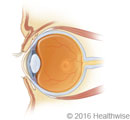
What is glaucoma?
Glaucoma is the name for a group of eye diseases that damage the optic nerve . This nerve carries information from the eye to the brain. When the nerve is damaged, you can lose your vision.
Glaucoma is one of the most common causes of legal blindness in the world. At first, people with glaucoma lose side (peripheral) vision. But if the disease isn't treated, vision loss may get worse. This can lead to total blindness over time.
There are three types of glaucoma.
- Open-angle glaucoma (OAG) is the most common form in the United States and Canada. (In other parts of the world, it's less common.) It usually affects both eyes at the same time. Your vision gradually gets worse. But it gets worse so slowly that you may not notice it.
- Closed-angle glaucoma (CAG) isn't very common in the U.S. and Canada. It usually affects one eye at time. CAG can happen suddenly and be a medical emergency.
- Congenital glaucoma is a rare form of glaucoma that some infants have at birth. Some children and young adults can also get a type of the disease.
What causes glaucoma?
The exact cause isn't known. Experts think that increased pressure in the eye (intraocular pressure) may cause the nerve damage in many cases. But some people who have glaucoma have normal eye pressure.
Some people get glaucoma after an eye injury or after eye surgery. Some medicines ( corticosteroids ) that are used to treat other diseases may also cause glaucoma.
What are the symptoms?
If you have OAG, the only symptom you are likely to notice is loss of vision. You may not notice this until it is serious. That's because the eye that is less affected makes up for the loss at first. Side vision is often lost before central vision.
Symptoms of CAG can be mild, with symptoms like blurred vision that last only for a short time. Severe signs of CAG include longer-lasting episodes of blurred vision or pain in or around the eye. You may also see colored halos around lights, have red eyes, or feel sick to your stomach and vomit.
In congenital glaucoma, signs can include watery eyes and sensitivity to light. Your baby may rub his or her eyes, squint, or keep the eyes closed much of the time.
How is glaucoma diagnosed?
Glaucoma can be diagnosed:
- During routine exams with your eye doctor.
- When you go to your family doctor because of an eye problem. Your doctor will ask you questions about your symptoms and do a physical exam. If your doctor thinks you have glaucoma, you will then need to see an eye doctor for eye exams and tests.
How is it treated?
Glaucoma can't be cured. But there are things you can do to help stop more damage to the optic nerve. To help keep your vision from getting worse, you'll probably need to use medicine (most likely eyedrops) every day. You may also need laser treatment or surgery. You'll also need regular checkups with your eye doctor.
How do you cope with glaucoma?
If you have vision loss, you can keep your quality of life. You can use vision aids, such as large-print items and special video systems, to help you cope with reduced eyesight. Support groups and counseling can also help you deal with vision loss.
Health Tools
Health Tools help you make wise health decisions or take action to improve your health.
Cause
The exact cause of glaucoma isn't known. Experts think that increased pressure in the eye ( intraocular pressure ) may cause the nerve damage in many cases. But some people who have glaucoma have normal eye pressure.
Get more information on eye anatomy and function.
Open-angle glaucoma
In open-angle glaucoma (OAG), fluid in the eye (aqueous humor) doesn't drain well. When this happens, the fluid builds up. This buildup increases the intraocular pressure (IOP) and may damage the optic nerve.
Up to half of the people with OAG don't have higher-than-normal IOP. This is called normal- or low-tension glaucoma.
Closed-angle glaucoma
In closed-angle glaucoma (CAG), fluid can't drain because the drainage angle is blocked. This may occur when:
- The colored part of the eye (iris) and the lens block the movement of fluid between the chambers of the eye. The blockage of fluid causes pressure to build up in the eye and makes the iris press on the eye's drainage system ( trabecular meshwork ). The increased pressure can cause damage to the optic nerve, leading to vision loss and possible blindness.
- You have a defect in your iris or another problem that causes the iris to fall forward and block the drainage angle.
- You have scar tissue between the iris and the cornea, and it blocks the eye's drainage system.
Congenital and infantile glaucoma
Glaucoma that is present at birth ( congenital glaucoma ) or that develops in the first few years of life (infantile glaucoma) is often caused by certain birth defects. A birth defect may occur because of an infection in the mother during pregnancy, such as rubella , or because of an inherited condition such as neurofibromatosis .
Secondary glaucoma
Some people get glaucoma after an eye injury or after eye surgery. A cataract and some medicines ( corticosteroids ) that are used to treat other diseases may also cause glaucoma. Glaucoma caused in these ways is called secondary glaucoma.
Symptoms
Symptoms of glaucoma vary according to the type of glaucoma you have.
Open-angle glaucoma (OAG)
Most people with OAG have no symptoms when they are diagnosed. You may have some side vision loss, but you may not notice it until the vision loss becomes severe. This is because the less affected eye makes up for your vision loss. The loss of sharpness of vision (visual acuity) may not become apparent until late in the disease. By that time, significant vision loss has occurred.
Closed-angle glaucoma (CAG)
CAG may cause no symptoms. Or symptoms may range from mild to severe. They usually affect only one eye at a time.
Severe symptoms may include:
- Sudden, severe blurring of vision.
- Severe pain. The pain may be in or around the eye .
- Colored halos around lights.
- Redness of the eye.
- Nausea and vomiting.
You may have short episodes of symptoms that usually occur in the evening and are over by morning. This is called subacute closed-angle glaucoma. CAG can also happen suddenly and require medical attention right away.
Congenital glaucoma
Symptoms of glaucoma present at birth (congenital glaucoma) and glaucoma that develops in the first few years of life (infantile glaucoma) may include:
- Watery eyes. The baby may also appear to be sensitive to light.
- An eye or eyes that look cloudy. This is a sign that the clear front surface of the eye (cornea) has been damaged.
- Eyes that look larger than normal because the eyeballs have become enlarged as a result of high pressure.
Your baby may rub his or her eyes, squint, or keep the eyes closed much of the time.
What Happens
Glaucoma usually affects side (peripheral) vision first. If glaucoma isn't treated, vision loss will continue, causing total blindness over time. If glaucoma is found early and treatment starts right away, good eyesight can usually be maintained.
Treatment for any type of glaucoma may delay or prevent further vision loss. But treatment can't reverse vision loss that has already occurred. In a few rare cases of congenital glaucoma, treatment has reversed some damage to the optic nerve.
How much your life will be affected depends on your lifestyle and on how bad your vision loss is. Normal use of your eyes (such as for reading or watching TV) won't speed up vision loss or make the condition worse. For information on how to live with low vision, see Home Treatment.
Open-angle glaucoma (OAG)
OAG usually affects both eyes at the same time. But one eye may be affected more than the other.
Vision changes so slowly that much of your eyesight may be affected before you notice the condition. Blind spots from each side of the field of vision gradually meet, increasing the area of blindness. Central vision, used for reading and seeing details, is affected last.
Closed-angle glaucoma (CAG)
CAG usually affects only one eye at a time. It can happen suddenly (acute) or be a long-term problem. If it's acute, it's an emergency. Severe and permanent vision loss can develop within hours or days after symptoms start.
You may have short episodes of CAG. Without treatment, these episodes will keep coming back. They can become an emergency situation (acute closed-angle glaucoma) or a long-term problem (chronic closed-angle glaucoma).
Congenital glaucoma
Congenital glaucoma may be present at birth or develop within the first few years of life. Treatment needs to start right away to help avoid further vision loss and blindness. In certain children, some of the optic nerve damage caused by the disease can be reversed with treatment.
What Increases Your Risk
Open-angle glaucoma (OAG)
Risk factors for OAG include:
- High pressure in the eyes. OAG is often linked with higher-than-normal pressure in the eyes (intraocular pressure, or IOP). Not all people with OAG have high IOP. But this is one treatable risk factor that doctors look for.
- Age. The risk for glaucoma increases rapidly after age 40.
- Race. Blacks are more likely than whites to have glaucoma.
- Family history of glaucoma. You're at risk for OAG if a relative has primary OAG, which is OAG that's not caused by another condition.
- Prior loss of vision in one eye from glaucoma. Damage in one eye from glaucoma is linked with a higher risk of future damage in the other eye.
- Diabetes. People who have diabetes tend to have higher pressure in their eyes than those who don't have the disease. People who have diabetes are also at risk for a type of secondary glaucoma where new blood vessels grow into and block the drainage angle of the eye .
Closed-angle glaucoma (CAG)
Risk factors for CAG include:
- Race. People from East Asia or with East Asian ancestry, as well as Inuit peoples, are more likely than other people to develop CAG. footnote 1
- Age. People over age 40 are at increased risk for CAG.
- Being female. Older women are more likely than older men to develop CAG.
- Farsightedness. People who are farsighted are more likely to develop this condition. That's because their eyes are smaller and the drainage angles of the eyes tend to be narrower, which allows them to become blocked more easily.
- Family history. People who have a family history of CAG are more likely to develop the condition.
- Having CAG in one eye. This increases the risk of getting the condition in the other eye. About half of the people who have had acute closed-angle glaucoma in one eye develop CAG in the second eye within 5 years. footnote 1
Congenital glaucoma
Risk factors for congenital glaucoma include:
- Infection in the mother during pregnancy. Babies born to mothers who have certain viral infections such as rubella during pregnancy are more likely to have the condition.
- Family history. A small number of infants with congenital glaucoma inherit the condition.
When should you call your doctor?
Call 911 or other emergency services immediately if you have:
- Sudden, severe blurring of vision in one eye.
- Severe pain in the affected eye.
- Extreme redness of the affected eye.
- Nausea and vomiting.
- Colored halos surrounding light sources.
Call your doctor if you:
- Notice blind spots in your vision.
- Notice that over time you are having more trouble seeing.
- Have a family history of glaucoma, are age 40 or older, and have not had an eye exam in more than a year. You may need to be examined by an eye specialist (ophthalmologist or optometrist) for signs of glaucoma.
- Have glaucoma and have side effects from the glaucoma medicines that you are taking.
Who to see
The following doctors can diagnose glaucoma:
An ophthalmologist can treat glaucoma and perform eye surgery.
Exams and Tests
Early detection and treatment of glaucoma are important for controlling the condition and preventing blindness.
A doctor evaluating possible glaucoma will take a medical history and do a physical exam. If your doctor suspects glaucoma, he or she will refer you to an eye specialist (ophthalmologist).
The eye specialist will check your eyes to help find out if you have the disease and how severe it is. He or she will look for certain signs of damage in the eye by checking things like:
- Eye structure. Ophthalmoscopy, gonioscopy, slit lamp exam, and optic coherence tomography all check the structures of the eye.
- Eye pressure. Tonometry measures the pressure in the eye (intraocular pressure, or IOP).
- Vision tests. These include tests to check for visual acuity and loss of side and central vision (perimetry testing).
- Cornea thickness. Tests such as ultrasound pachymetry measure the thickness of the clear front surface of the eye ( cornea ). Cornea thickness, along with intraocular pressure, helps determine your risk for glaucoma.
After glaucoma is diagnosed, eye exams are done on a regular basis to monitor the disease.
Your doctor may also do a low-vision evaluation to help find ways you can make the most of your remaining vision and maintain your quality of life.
Early detection
If you are younger than 40 and have no known risk factors for glaucoma, the American Academy of Ophthalmology (AAO) recommends that you have a complete eye exam every 5 to 10 years. This includes tests that check for glaucoma. footnote 2 The AAO suggests more frequent routine eye exams as you age, even if you aren't at increased risk for glaucoma.
Treatment Overview
Most treatment for glaucoma is aimed at lowering the pressure in the eyes (intraocular pressure, or IOP). This helps save your eyesight by slowing the damage to the optic nerve. In adults, treatment can't restore eyesight that has already been lost as a result of glaucoma. But in certain children, some of the damage caused by congenital glaucoma can be reversed.
Treatment options include medicines and surgery, including laser surgery. The risks and benefits of these options differ depending on the type of glaucoma and other factors.
It is important to understand that treatment for glaucoma will most likely continue for the rest of your life. You will need regular eye exams by an eye doctor. Ask your doctor about the best treatment for your particular condition.
Though glaucoma can lead to a significant loss of vision, your doctor can refer you to counselors who specialize in helping people adjust to living with low vision.
Target eye pressure
The eye doctor sets a target eye pressure for each eye and will check it regularly. If the pressure is high enough, or if the doctor sees signs of damage caused by glaucoma, the doctor may advise that you start taking medicine, change the medicine you take, or think about having surgery.
Open-angle glaucoma (OAG)
Treatment for OAG usually starts with medicines (most likely eyedrops) to lower the pressure inside the eye. If medicines don't work, your doctor may use laser treatment or surgery. In some cases, laser treatment or surgery will be tried before medicine.
Closed-angle glaucoma (CAG)
Initial treatment for CAG is usually a procedure called laser iridotomy. You may also need medicine (usually eyedrops) to help you stay at your target eye pressure.
If the pressure in your eye stays high or if damage to the optic nerve gets worse despite treatment, your doctor will adjust your treatment. In some cases, your doctor may need to adjust your medicines. Or, if you haven't had the laser procedure, you may need this or another surgery.
Acute closed-angle glaucoma
CAG can be an emergency situation (acute closed-angle glaucoma). Blockage of fluid in the eye causes a sudden increase in pressure, causing rapid damage to the optic nerve.
Acute closed-angle glaucoma usually causes significant pain. Laser treatment is needed right away for this problem.
If you have had a case of acute closed-angle glaucoma, your ophthalmologist may talk with you about having cataract surgery. It may be discussed even if you don't have a cataract that's bothering you right now. You can talk with your doctor about the pros and cons of each option to lower your risk of future problems with closed-angle glaucoma.
Congenital glaucoma
Congenital glaucoma almost always requires surgery to lower eye pressure. Medicine may sometimes be used, but it usually doesn't work as well.
Unproven treatments
Because glaucoma can't be cured and treatment doesn't always prevent further loss of vision, people may try alternative unproven treatment methods, such as acupuncture or marijuana. But most of these alternative treatments either haven't been studied or haven't been proved to work for glaucoma. Such treatments may be expensive. And some can be hazardous to your health.
To learn more, see Home Treatment, Medications, and Surgery.
Prevention
Most of the risk factors (such as age, race, and family history) for glaucoma are beyond your control. Whether or not you are at increased risk for glaucoma, it's best to get routine eye exams and tests as your eye doctor suggests. Finding and treating glaucoma early is important to help prevent blindness.
If you have high pressure in your eyes but you don't have glaucoma, your eye doctor may suggest treatment that helps lower your eye pressure. This may help delay or prevent the onset of glaucoma.
Home Treatment
Glaucoma can affect your life. How much you are affected depends on how bad your vision loss is, what kinds of activities you do, and your lifestyle. You can work with your doctor to find ways to make the best use of your remaining vision. You can:
- Use vision aids such as video enlargement systems and large-print items.
- Position lighting so that it's aimed at what you want to see and aimed away from your eyes.
- Mark the areas around stairways and ramps with paint or tape.
It's common to feel sad or angry when you learn that you have glaucoma. Try building a support group of family and friends. Your doctor can also refer you to counselors who specialize in helping people adjust to living with low vision.
Medicine is a large part of your treatment. Be sure to:
- Use your glaucoma medicines as prescribed by your doctor.
- Check with a doctor before taking any over-the-counter medicines if you have closed-angle glaucoma or you are at risk for it.
- Carry a wallet card or other identification that states that you have glaucoma.
Medications
Prescription medicines to lower the pressure inside the eye (intraocular pressure, or IOP) are used to treat all types of glaucoma. They work either by reducing the amount of fluid (aqueous humor) that is produced by the eye or by increasing the amount of fluid that drains out of the eye. These medicines may be given as eyedrops, as pills, in liquid form by mouth, or through a vein (in emergency situations). In most cases, eyedrops are used first.
In congenital glaucoma , medicines may be used to decrease the pressure in the eyes and reduce the cloudiness of the clear front surface (cornea) of the child's eye. Medicines are usually only used until surgery can be done.
When glaucoma has already caused vision loss, further vision loss may occur even after the pressure in the eye is lowered to the normal range with medicine. Talk to your doctor about the goals of treatment, how long the medicine will be tried, and the possible side effects. Eye medicines can cause symptoms throughout the body.
You will need follow-up visits with your doctor to find out whether your medicine is working as well as it should. You can also discuss any side effects or medicine schedule problems.
In most cases, medicines used to treat glaucoma must be continued daily for the rest of your life.
Medicine choices
Medicines that decrease the amount of fluid produced by the eye include:
- Beta-blockers (such as Betagan, Betimol, Ocupress, and Timoptic).
- Adrenergic agonists (such as Alphagan and Propine).
- Carbonic anhydrase inhibitors (such as Azopt, Diamox, and Trusopt).
- Hyperosmotics (such as Osmitrol).
Medicines thatincrease the amount of fluid that drains out of the eye include:
- Cholinergics (such as Isopto Carpine, Phospholine, and Pilopine).
- Adrenergic agonists (such as Alphagan and Propine).
- Prostaglandin analogs (such as Lumigan, Travatan, and Xalatan).
Some medicines have two different medicines mixed into one bottle.
About your medicines
- Use your glaucoma medicines as prescribed by your doctor. If you need reminders for using your medicines, use alarm clocks or watches, notes on mirrors or tables, and other cues.
- Learn how to use eyedrops. This can help reduce side effects. If you notice side effects from your glaucoma medicine, tell your doctor. Your medicine may need to be changed.
- If you have closed-angle glaucoma or you are at risk for it, check with a doctor before taking any over-the-counter medicines. You'll need to avoid medicines that widen (dilate) the pupil, such as antihistamines and motion sickness medicines.
- Make sure all your doctors know that you have glaucoma. Tell your eye specialist what other prescription medicines you are taking.
- Learn cost-saving tips for glaucoma. For example, use a measured-dose dispenser.
- Carry a wallet card or other identification that states that you have glaucoma. The card needs to list all medicines you are taking, including glaucoma medicines.
Surgery
Surgery reduces the pressure in the eyes by opening blocked drainage angles or creating a new opening that fluid can flow through to leave the eye. In some cases surgery may be done to relieve pain caused by glaucoma.
Doctors can use either a surgical cutting tool or a very focused beam of light, called a laser, to do surgery for glaucoma. Laser surgery is usually the first type of surgery tried. If laser surgery doesn't help, your doctor may try conventional surgery.
It is not unusual for some people to have both open- and closed-angle glaucoma. They may need more than one kind of procedure.
Surgery choices for adults
There are three basic types of surgery for glaucoma in adults.
Surgery to increase drainage of fluid from the eye
This type of surgery involves making a trapdoor that allows fluid to drain from the eye. Examples of this type of surgery include the following:
- Trabeculectomy involves an incision to remove a piece of tissue to allow fluid to drain from the eye.
- A glaucoma stent is a device that is implanted into the eye to allow fluid to drain.
- Tube-shunt surgery (seton glaucoma surgery) involves an incision to place a tube in the eye to allow fluid to drain.
- Laser trabeculoplasty burns tissue to create an opening that allows fluid to drain from the eye.
- Laser sclerostomy removes a piece of the white part of the eye to allow fluid to drain. This type of surgery is rarely done.
Surgery to prevent closure of the drainage angle
These procedures involve making a new opening in the colored part of the eye (iris) that allows fluid to flow through the eye. They are used to treat sudden (acute) and long-term closed-angle glaucoma. The procedures also may be recommended to try to prevent closed-angle glaucoma in people who have narrow drainage angles.
- Surgical iridectomy uses a surgical cutting tool.
- Laser iridotomy uses a laser.
Laser iridotomy can usually be done instead of surgical iridectomy. But some people with complicated or severe glaucoma may need to have surgical iridectomy.
Surgery to decrease the amount of fluid produced in the eye
When other surgery fails to improve the flow of fluid from the eye, procedures to destroy the part of the eye that produces fluid (ciliary body) can be done. These procedures are also used when scar tissue has formed after a previous surgery.
Surgery choices for children
For congenital glaucoma, there are two slightly different procedures that both attempt to open the drainage angle directly. They are equally successful in children, but they are not used for adults. If these procedures fail in a child, then trabeculectomy or tube-shunt surgery may be tried.
- Goniotomy creates an opening in the trabecular meshwork to allow fluid to drain from the eye.
- Trabeculotomy removes a piece of tissue to allow fluid to drain from the eye.
Deciding about surgery
Deciding whether to have surgery is difficult because:
- You may not be in pain or notice any vision loss.
- Your vision may get worse right after surgery and may be affected for weeks or months. Your eyesight may not be as good as it was before the surgery.
- Surgery isn't a complete cure for glaucoma. But surgery can decrease the chance of losing even more eyesight later on. And for some people, it can reduce or get rid of the need for eyedrops.
- Not everyone who has laser surgery will have lower IOP after the surgery. For most people, the lower pressure will last only a few years. Others may have an increase in their eye pressure. Certain types of open-angle glaucoma respond better to laser surgery than others.
- The effects of some laser treatments aren't long-lasting. Repeat laser treatments, medicines, or other surgeries may be needed later on.
As with any other surgery, you and your doctor should make the decision to operate based on the risks and benefits of having the surgery. One thing to consider is which eye should be operated on first. There may be other questions about glaucoma surgery that you should discuss with your doctor before making a decision.
Cataracts may occur in people who also have glaucoma. This commonly occurs in older people. Surgery to remove the cataract may be done at the same time as surgery for glaucoma. If surgeries for glaucoma and a cataract are done at the same time, you may notice improved eyesight after surgery.
Related Information
References
Citations
- American Academy of Ophthalmology (2010). Primary Angle Closure (Preferred Practice Pattern). San Francisco: American Academy of Ophthalmology. Also available online: http://aao.org/ppp.
- American Academy of Ophthalmology (2010). Comprehensive Adult Medical Eye Evaluation (Preferred Practice Pattern). San Francisco: American Academy of Ophthalmology. Available online: http://one.aao.org/CE/PracticeGuidelines/PPP_Content.aspx?cid=64e9df91-dd10-4317-8142-6a87eee7f517.
Other Works Consulted
- American Academy of Ophthalmology (2007). Vision Rehabilitation for Adults (Preferred Practice Pattern). San Francisco: American Academy of Ophthalmology. Available online: http://one.aao.org/CE/PracticeGuidelines/PPP.aspx.
- Salmon JF (2011). Glaucoma. In P Riordan-Eva, ET Cunningham, eds., Vaughan and Asbury's General Ophthalmology, 18th ed., pp. 222–237. New York: McGraw-Hill.
- Trobe JD (2006). The red eye. Physician's Guide to Eye Care, 3rd ed., chap. 4, pp. 47–51. San Francisco: American Academy of Ophthalmology.
- Vass C, et al. (2007). Medical interventions for primary open angle glaucoma and ocular hypertension. Cochrane Database of Systematic Reviews (4).
Credits
Current as of: December 18, 2019
Author: Healthwise Staff
Medical Review:
Adam Husney MD - Family Medicine
E. Gregory Thompson MD - Internal Medicine
Christopher J. Rudnisky MD, MPH, FRCSC - Ophthalmology
- Top of the page
-
Next Section:
Health Tools
-
Previous Section:
Topic Overview - Top of the page
-
Next Section:
Cause
-
Previous Section:
Health Tools - Top of the page
-
Next Section:
Symptoms
-
Previous Section:
Cause - Top of the page
-
Next Section:
What Happens
-
Previous Section:
Symptoms - Top of the page
-
Next Section:
What Increases Your Risk
-
Previous Section:
What Happens - Top of the page
-
Next Section:
When should you call your doctor?
-
Previous Section:
What Increases Your Risk - Top of the page
-
Next Section:
Exams and Tests
-
Previous Section:
When should you call your doctor? - Top of the page
-
Next Section:
Treatment Overview
-
Previous Section:
Exams and Tests - Top of the page
-
Next Section:
Prevention
-
Previous Section:
Treatment Overview - Top of the page
-
Next Section:
Home Treatment
-
Previous Section:
Prevention - Top of the page
-
Next Section:
Medications
-
Previous Section:
Home Treatment - Top of the page
-
Next Section:
Surgery
-
Previous Section:
Medications - Top of the page
-
Next Section:
Related Information
-
Previous Section:
Surgery - Top of the page
-
Next Section:
References
-
Previous Section:
Related Information - Top of the page
-
Next Section:
Credits
-
Previous Section:
References - Top of the page
Current as of: December 18, 2019
Author: Healthwise Staff
Medical Review: Adam Husney MD - Family Medicine & E. Gregory Thompson MD - Internal Medicine & Christopher J. Rudnisky MD, MPH, FRCSC - Ophthalmology

