Condition Basics
What is carpal tunnel syndrome?
Carpal tunnel syndrome is numbness, tingling, weakness, pain, and other problems in your hand that are caused by pressure on the median nerve in your wrist.
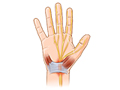
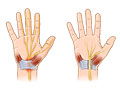
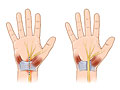
The median nerve and several tendons run from your forearm to your hand. They pass through a small space in your wrist called the carpal tunnel. The median nerve controls movement and feeling in your thumb and first three fingers. It doesn't control movement of your little finger.
What causes it?
Pressure on the median nerve causes carpal tunnel syndrome. Activities that cause repeated movements and vibration can cause this pressure. Sometimes the cause isn't known. Thyroid problems, diabetes, and pregnancy are some of the things that make carpal tunnel syndrome more likely.
What are the symptoms?
Carpal tunnel syndrome can cause tingling, numbness, weakness, or pain in the palm side of the fingers and hand. Some people may have pain in their arm between the hand and the elbow. Symptoms most often occur in the thumb, index finger, middle finger, and half of the ring finger.
How is it diagnosed?
To diagnose this syndrome, your doctor will ask about health problems that could cause the condition. The doctor will ask about your routine and any recent activities that could have hurt your wrist, arm, or neck. You will get a physical exam, including comparing the strength of both hands. You may need nerve tests.
How is carpal tunnel syndrome treated?
You can treat mild symptoms of carpal tunnel syndrome with home care. This includes wearing a wrist splint, icing your wrist, and avoiding activities that cause the problem. Corticosteroids taken by mouth or by injection are a treatment option. Surgery may be needed when you have severe symptoms and when other treatments haven't helped.
Cause
Carpal tunnel syndrome occurs when a combination of health conditions and activities puts pressure on the median nerve. The median nerve passes through the carpal tunnel in your wrist. This pressure leads to symptoms.
Anything that decreases the amount of space in the carpal tunnel or increases the amount of tissue in the tunnel can lead to carpal tunnel syndrome. So can anything that makes the median nerve more sensitive.
Things that help cause carpal tunnel syndrome include:
- Conditions or illnesses that can cause or contribute to arm pain or swelling in the joints and soft tissues in the arm, or to reduced blood flow to the hands. These include obesity, rheumatoid arthritis, pregnancy, diabetes, and hypothyroidism.
- Repeated hand and wrist movements. They can cause the membranes around the tendons to swell (tenosynovitis).
- Broken wrist bones, dislocated bones, new bone growth from healing bones, or bone spurs. These can take up space in the carpal tunnel and put more pressure on the median nerve.
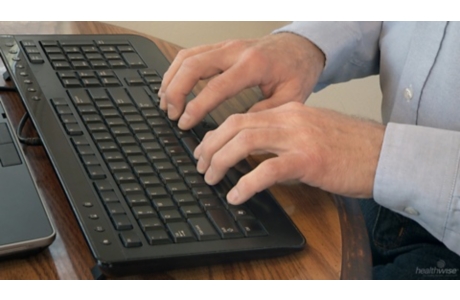
Carpal tunnel syndrome is a common work-related condition. It can be caused by work that requires:
- Forceful or repetitive hand movements.
- Hand-arm vibration.
- Working for long periods in the same or awkward positions.
Carpal tunnel syndrome is even more likely if you have these work-related issues along with other health conditions.
In some cases the cause of carpal tunnel syndrome can't be found.
What Increases Your Risk
Things that put you at risk for carpal tunnel syndrome include:
- Health problems that can cause arm pain, swelling in the joints and soft tissues in the arm, or reduce the blood flow to the hands. These include obesity, rheumatoid arthritis, pregnancy, diabetes, and hypothyroidism.
- Being female or pregnant. Those who are near the end of their pregnancies often have short-term symptoms.
- Hand and wrist activities that require repeated motions, especially in awkward positions.
- Smoking. It can affect blood flow to the median nerve in your wrist.
- Broken wrist bones, dislocated bones, new bone growth from healing bones, or bone spurs. These can take up space in the carpal tunnel and put more pressure on the median nerve.
Prevention
In daily routines at home, at work, or while doing hobbies, think about changing activities in which you make repeated finger, hand, or wrist movements. Train yourself to use other positions or techniques that won't stress your hand or wrist.
- Take good care of your general health.
This includes staying at a healthy weight, not smoking, and getting regular exercise.
- Keep your wrists straight, or only slightly bent, and in line with your arms.
Avoid activities that bend or twist the wrists for long periods of time. Use hand and wrist movements that spread the pressure and motion evenly throughout your hand and wrist.
- Take breaks often, and rest your hands.
- Switch hands and change positions often when you are doing repeated motions.
- Use your whole hand to grasp an object.
Avoid gripping with only the thumb and index finger. This can stress your wrist.
- Stop any activity that you think may be causing finger, hand, or wrist numbness or pain.
If your symptoms improve when you stop, resume that activity gradually.
- Wear a wrist splint when you cannot control your wrist motion, such as while sleeping.
A splint can keep your wrist in a neutral position and reduce the stress on your fingers, hand, or wrist.
Learn more
Watch
Symptoms
Mild carpal tunnel symptoms most often affect the hand and sometimes the forearm, but they can spread up to the shoulder. Symptoms include:
- Numbness or pain in your hand, forearm, or wrist that wakes you up at night. (Shaking or moving your fingers may ease this numbness and pain.)
- Occasional tingling, numbness, "pins-and-needles" sensation, or pain. The feeling is similar to your hand "falling asleep."
- Numbness or pain that gets worse while you use your hand or wrist. You are most likely to feel it when you grip an object with your hand or bend (flex) your wrist.
- Occasional aching pain in your forearm between your elbow and wrist.
- Stiffness in your fingers when you get up in the morning.
With moderate or severe carpal tunnel symptoms, you may have numbness or reduced strength and grip in your fingers, thumb, or hand. It may be hard to:
- Do simple hand movements, such as brushing your hair or holding a fork. You may accidentally drop objects.
- Pinch an object between your thumb and first finger. (This is called loss of pinch strength.)
- Use your thumb while doing simple tasks such as opening a jar or using a screwdriver. With long-term carpal tunnel syndrome, the thumb muscles can get smaller and weaker (atrophy).
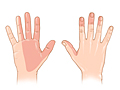
Symptoms most often occur in parts of the hand supplied by the median nerve. These are the thumb, the index finger, the middle finger, and half of the ring finger. The median nerve doesn't affect your little finger. So if your little finger is affected, you may not have carpal tunnel syndrome.
Symptoms often occur in both hands, but they are usually worse in one hand than the other. You may first notice symptoms at night. People with carpal tunnel syndrome can usually fall asleep, but pain or numbness may wake them up.
Not all pain in the wrist or hand is caused by carpal tunnel syndrome. There are many other conditions with similar symptoms, such as:
- An injury to the muscles, ligaments, tendons, or bones.
- Nerve problems in the fingers, elbow, or neck.
- Arthritis in the thumb joint or wrist.
What Happens
The symptoms of carpal tunnel syndrome usually develop gradually. Symptoms often improve if you stop or change an activity that is helping to cause the condition.
Most mild cases of carpal tunnel syndrome get better with treatment. Usually there is no permanent damage to the median nerve. Your symptoms may improve by themselves when:
- Fluid buildup decreases, such as after pregnancy.
- You change or stop the activity that has caused your carpal tunnel syndrome.
- Other health problems that cause or contribute to your carpal tunnel symptoms improve.
Long-term carpal tunnel syndrome can cause:
- A loss of feeling and coordination in the fingers and hand. The thumb muscles can become weak and get smaller (atrophy). This can make it hard to grip or hold objects.
- Permanent damage to the median nerve. You may have trouble using the hand.
When to Call a Doctor
Call 911 or go to an emergency room immediately if you notice sudden loss of feeling in your arm.
Call your doctor if you:
- Have tingling, numbness, weakness, or pain in your fingers or hand that keeps coming back or that has not gone away after 2 weeks of home treatment.
- Have gradually developed little or no feeling in your fingers or hand.
- Cannot do simple hand movements, or you drop things.
- Cannot pinch your thumb and index finger together, or your pinch is weak.
- Cannot use your thumb normally (diminished thumb strength).
- Have problems with daily activities because of pain in your fingers or hand.
Watchful waiting
You can treat mild symptoms of wrist and hand pain or numbness at home. You may try home treatment for 1 to 2 weeks before calling your doctor.
Exams and Tests
To diagnose carpal tunnel syndrome, your doctor will ask if you have any health problems, such as arthritis, hypothyroidism, or diabetes. The doctor may ask if you are pregnant. The doctor will ask if you recently hurt your wrist, arm, or neck. Your doctor will want to know about your daily routine and any recent activities that could have hurt your wrist.
During the exam, your doctor will check the feeling, strength, and appearance of your neck, shoulders, arms, wrists, and hands. The doctor may suggest having tests, such as:
- Nerve testing to check the median nerve.
- An ultrasound to look at the size of the median nerve.
- An MRI to find out what is putting pressure on the median nerve.
- Blood tests to check for a thyroid problem, rheumatoid arthritis, or other conditions.
Learn more
Watch
Treatment Overview
Treatment for carpal tunnel syndrome is based on how serious it is, if there is any nerve damage, and if other treatment has helped.
If your symptoms are mild, home treatment for 1 to 2 weeks is likely to relieve your symptoms. Try these tips.
- Wear a wrist splint.
- Stop or change activities that cause numbness and pain.
- Ice your wrist.
- Try nonsteroidal anti-inflammatory drugs (NSAIDs) for pain.
Corticosteroids may treat the swelling of the nerve and your pain. They can be taken in pill form or injected into the wrist by a doctor. Physical therapy or occupational therapy is sometimes used.
Surgery is an option. But it's mostly used only when symptoms are so bad that you can't work or do other things even after several weeks to months of other treatment.
The sooner you start treatment, the better your chances are to stop symptoms and prevent long-term damage to the nerve.
Learn more
Self-Care
Home treatment for carpal tunnel syndrome can ease pain and prevent further or permanent damage to your median nerve. Home treatment may completely relieve your symptoms if you start treatment when symptoms first occur.
If you have mild symptoms, such as occasional tingling, numbness, weakness, or pain in your fingers or hand, try the following steps to reduce inflammation.
- Rest your fingers, hand, and wrist.
- Stop activities if they cause numbness and pain.
When your symptoms improve, resume the activity gradually. As you do, keep your wrists straight or only slightly bent.
- Ice your wrist once or twice an hour.
Ice it for 10 to 15 minutes at a time.
- Think about taking nonsteroidal anti-inflammatory drugs (NSAIDs).
These medicines can help relieve pain and reduce swelling. Studies haven't shown NSAIDs to be effective for carpal tunnel syndrome, but they may help relieve your symptoms. Be safe with medicines. Read and follow all instructions on the label.
- Wear a wrist splint at night.
A splint keeps your wrist in a neutral position and relieves pressure on your median nerve. A splint might give you temporary relief. These splints aren't meant to be worn for a long period of time. But wearing them whenever you sleep can help you manage carpal tunnel syndrome over the long term.
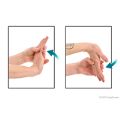
Talk to your doctor about starting exercises for flexibility and strength for your arm and wrist. Sample exercises are the prayer stretch, wrist flexor stretch, and wrist extensor stretch. Also, learn the best positions and posture for hand and wrist movements.
Learn more
Watch
Medicines
Medicine may relieve swelling, inflammation, and pain in the wrist or hand caused by carpal tunnel syndrome. Reducing swelling in the wrist will relieve pressure on the median nerve in the carpal tunnel. This helps relieve your symptoms.
Medicine choices include:
- Corticosteroids. These are powerful anti-inflammatory medicines. They can be used on their own or along with a wrist splint. Talk to your doctor about possible side effects. Corticosteroids can be taken in pill form or injected into the wrist by a doctor.
- Nonsteroidal anti-inflammatory drugs (NSAIDs). These medicines can help relieve pain and reduce swelling. Studies haven't shown NSAIDs to be effective for carpal tunnel syndrome, but they may help relieve your symptoms. Be safe with medicines. Read and follow all instructions on the label. Do not take NSAIDs if you are taking corticosteroids.
Medicine should be used with other treatments (such as ice, rest, and splints) to reduce pain and inflammation.
Learn more
Surgery
Surgery may be an option when other treatment hasn't helped, if you've had carpal tunnel syndrome for a long time, or if there's nerve damage or the risk of nerve damage.
The most common surgery for relieving carpal tunnel symptoms involves cutting the transverse carpal ligament. This helps relieve pressure on the median nerve in the wrist. Two approaches for this surgery may be used. They are:
- Open carpal tunnel release surgery. This requires a longer recovery time and leaves a larger scar than endoscopic surgery. But there may be less chance of other problems, like nerve damage or the need for a second surgery.
- Endoscopic carpal tunnel release surgery. Recovery is quicker than with open surgery. The scars heal sooner. They're smaller and tend to be less painful than they are in open release surgery. But there may be a slightly higher chance of needing another surgery later.
Some surgeons are now doing small- or mini-open release surgery. This requires a smaller incision than standard open release surgery. It may reduce healing time and scarring. It also allows the surgeon to view the ligament directly during the surgery. This helps to minimize danger to the nerve.
Your decision about whether to use open or endoscopic surgery may depend on your doctor's experience with the procedures. Endoscopic carpal tunnel surgery uses special equipment. It's most successful when the doctor has done the procedure many times.
Learn more
Credits
Current as of: July 17, 2023
Author: Healthwise Staff
Clinical Review Board
All Healthwise education is reviewed by a team that includes physicians, nurses, advanced practitioners, registered dieticians, and other healthcare professionals.


 Sign out