Glaucoma Screening
Topic Overview
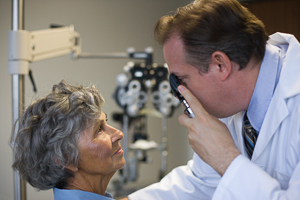
If you are younger than 40 and have no known risk factors for glaucoma , the American Academy of Ophthalmology (AAO) recommends that you have a complete eye exam every 5 to 10 years. This includes tests that check for glaucoma. footnote 1 The AAO suggests more frequent routine eye exams as you age.
The AAO also suggests that people who are at risk for glaucoma have complete eye exams according to the schedule below:
- Ages 40 to 54, every 1 to 3 years
- Ages 55 to 64, every 1 to 2 years
- Ages 65 and older, every 6 to 12 months
Your eye doctor may advise you to have eye exams more often, depending on your level of risk and your overall eye health.
People at increased risk for glaucoma include those who: footnote 2
- Are middle-aged and older. The chance of getting glaucoma gets higher as you age, especially after age 40.
- Have a family history of glaucoma.
- Have high eye pressure (high intraocular pressure ).
- Are African Americans (for open-angle glaucoma ).
- Are East Asians and people with East Asian ancestry (for closed-angle glaucoma ).
- Are farsighted (greater risk for developing closed-angle glaucoma).
- Have had an eye injury or eye surgery, such as cataract surgery.
- Have diabetes.
- Have high blood pressure (hypertension).
- Have been taking corticosteroid medicines.
Because people with glaucoma may have normal pressures in their eyes, measuring eye pressure (tonometry) should not be used as the only test for glaucoma. It needs to be combined with other tests before glaucoma can be diagnosed.
After reviewing all of the research, the U.S. Preventive Services Task Force (USPSTF) has not recommended for or against routine glaucoma screening for all adults. footnote 3
For more information about glaucoma and vision screening, see the topics Glaucoma and Vision Tests.
Current as of: December 18, 2019
Author: Healthwise Staff
Medical Review: Adam Husney, MD - Family Medicine & Christopher Joseph Rudnisky, MD, MPH, FRCSC - Ophthalmology

